(Note: If Mr. Aristide's circle of defenders has now been whittled down to the likes of veteran perjurer and unfulfilled triggerman Patrick Elie, his influence has sunk very low indeed. MD)
Aristide's SA high life to continue
July 05 2009 at 02:12PM
By Fiona Forde
The Sunday Independent
(Read the original article here)
A chauffeur-driven white Mercedes pulls up at the entrance to Unisa's Samuel Pauw building, with a BMW in tow, from which security guards emerge to escort the former head of state the few metres to his fifth-floor office. One guard walks in front of him. The other follows a few steps behind.
An ante-room leading to his main office is guarded under lock and key, even when he is inside. A side room houses his security guards who keep watch whenever he is around.
Outside, the engine of his Mercedes purrs all day long, for fear he will have to make a quick escape. This is Jean-Bertrand Aristide, former president of Haiti, who controversially remains exiled in South Africa, his multimillion-rand lifestyle and protection package here bankrolled by taxpayers.
Thabo Mbeki's government afforded him, his wife and two daughters shelter here in 2004 when he was ousted from office in Port-au-Prince shortly after his second term began. Because he was a head of state, the South African government also agreed to "cover the costs of the stay of President Aristide, his family, staff and entourage in South Africa", according to Parliament's records in 2006. "The monthly costs of his accommodation, transport, office support staff and security are similar to the cost normally incurred for a South African cabinet minister," the official record reads.
Sue van der Merwe, the deputy minister for international relations, has confirmed the agreement is still in place, though she was unable to put a tally on the cost to the taxpayer to date, or confirm for how much longer the agreement would remain in place.
Yet it is said that Aristide was a wealthy man when he fled his impoverished country five years ago, though what became of his money is something that continues to elude the authorities.
When asked if he brought any money into South Africa, Van der Merwe said she did not know.
Allegations of corruption continue to haunt Aristide and investigations are ongoing. His critics suggest that his wealth is vast, so vast that he could well afford to foot his own bill here… and more.
Gerard Latortue, a former United Nations official who headed the interim government after Aristide fled, told The Sunday Independent that Aristide's wealth was undisputed in most circles. "And yes, of course, he could pay his way in South Africa. This man is a multi-millionaire."
However, according to Van der Merwe, "Mr Aristide would like to go back to Haiti" now, but she said the local authorities were concerned for his safety.
It is a view that was confirmed by Patrick Elie, Aristide's close friend and former defence minister.
"Yes, he would like to come back," Elie said from his Port-au- Prince home. "But to do what exactly, I don't know. This is something that cannot be improvised. It would be very, very delicate."
In response, Haiti's foreign minister, Alrich Nicolas, said that, "under the constitution, Aristide can come back", but he would not be drawn on the fate he might face if he did.
Aristide, biding his time at Unisa, is unlikely to test those uncertain waters.
Shortly after his arrival in 2004, Aristide, who was then 50, was offered a research position at the human sciences faculty, which he still holds to this day.
Some years later his wife, Mildred, took up a post at the Centre for African Renaissance Studies, which is also housed at Unisa, and which she still holds today. However, neither of them draws a salary, according to Unisa spokesperson Doreen Gough. "They only have the use of the offices they occupy to carry out their work," she said.
Aristide, a former priest and long-time scholar of theology, was awarded a doctorate by Unisa in 2006 for his comparative study of Haitian Creole and Zulu in a body of work called Umoya Wamagama, or The Spirit of the Word. He was lauded a brilliant mind for the parallels he had drawn between the two languages and the inferences he made about their linguistic histories. His graduation was a big celebration, and the photos of himself and Mbeki on the day paint a picture of contentment.
Some months later, however, his research was called into disrepute when three prominent African linguists said his work made a mockery of local languages. Spelling errors were also found in some of the Zulu words, which weakened the comparisons he was making.
Fellow academics cried foul when it was discovered that the professor who promoted the thesis was also the man who corrected it.
However, Aristide withstood the criticism and the doctorate remained intact.
"He really enjoys intellectual and academic life," claims Elie.
It is unclear, though, what contribution Aristide is making to Unisa's body of academic work.
Showing posts with label Patrick Elie. Show all posts
Showing posts with label Patrick Elie. Show all posts
Friday, July 10, 2009

Sunday, March 16, 2008
Final notes on Patrick Elie
For several years now, from time to time I have come across the repeating of a libelous statement that a Haitian political operator named Patrick Elie made about me in the pages of two fringe publications, Michael Albert’s Znet and the former Haiti Progres, which was then edited by the American Kim Ives, before the latter departed to form Haiti Liberté amid charges of nepotism and financial irregularities.
As Mr. Elie, a violent and erratic individual with a history of perjury and other unsavoury activities [1], is such a marginal figure in Haiti's political landscape (despite his desperate courting of foreign journalists) and as Haiti has such genuinely serious problems facing it, save for two paragraphs in an article I wrote in 2006, I thought it best to just to let the matter lie. However, these years later, at the urging of some friends who continue to be concerned about the words of someone as nefarious as Mr. Elie taking root, I will take a moment here to respond in detail as I have not before.
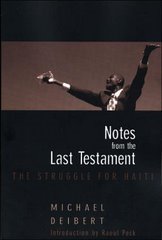
On December 3, 2002, the first anniversary of the murder of the journalist Brignol Lindor, I attended a mass at Petionville's Église Saint Pierre in his honor and the honor of all the other journalists who had died, been attacked or been forced into exile, including Jean Léopold Dominique, the director of Radio Haiti Inter slain in April 2000. At the receiption that morning were Radio Metropole owner Richard Widmayer, Radio Kiskeya programme director Lilianne Pierre-Paul, U.S. Ambassador Brian Dean Curran, then-Haitian Senate President (and future convinced drug trafficker) Fourel Celestin, Radio Haiti Inter's director (and Dominique widow) Michèle Montas and Patrick Elie himself. I briefly alluded to the presence of all of the above in my 2005 book Notes from the Last Testament: The Struggle for Haiti. On that day, I addressed Mr. Elie - whom I had met several times previously - by name and in English on the steps of the Église Saint Pierre.
In a 2006 article on my book, a Canadian writer named Justin Podur, who had visited Haiti only once and spoke no Kreyol, made the use of an expletive-laden diatribe by Mr. Elie to claim that I had falsely stated that Mr. Elie was at Haiti’s Cathedral National that day when he was not.
Simply put, this was a lie.
Mr. Podur, perhaps understandably given his unfamiliarity with Haiti, had confused the Église Saint Pierre with Haiti's National Cathedral, several miles downtown, claiming that was where I had place Mr. Elie, even though my text clearly and repeatedly specified the Église Saint Pierre. Faced with their error, neither Mr. Podur nor Mr. Elie nor Mr. Albert nor Mr. Ives retreated from their libelous claim, perhaps not surprising given their respective characters and the ease with which Mr. Elie, in far graver matters, had previously veered from the truth.
Though I have not wanted to bother her by bringing her into such trivialities, writing to Michele Montas about the incident in question, she responded simply, in a February 17, 2006 email as follows:
I don’t really remember if Patrick was on the steps but he must have been at the Eglise Saint Pierre that day.
Ms. Montas never went public about the incident, nor did I ever ask her to. However, Mr. Elie still trying to pass himself off as anything but the dangerous prevaricator that he is simply won't do, I'm afraid.
Had I enough money, I might indeed have considered hauling Messrs. Podur, Elie, Albert and Ives to court [these people generally attack those without the means to fight back] but, then again, if I had that kind of money it would not doubt be better spent investing in something that actually improves the lives of Haitians, such as the micro-credit institutions FONKOZE, rather than settling scores with dilettantes and political opportunists who discredited themselves long ago.
Attempting to smear someone’s reputation when they threaten powerful forces - in this case former Haitian president Jean-Bertrand Aristide and his lavishly-funded propaganda machine in the United States - is a very standard trick, one which Mr. Aristide used himself against opponents as diverse as former Port-au-Prince mayor Evans Paul and peasant leader Chavannes Jean-Baptiste. I have watched the endless attacks against journalists whom I much admire in countries where I work such as Haiti and Guatemala and, quite honestly, in an odd way, I feel somewhat honored to be considered important enough to be in their company.
By using Mr. Elie - a man with a documented record for rather creepy and potentially lethal plotting - to attack me, people like Justin Podur, Michael Albert and Kim Ives no doubt believed that they would succeed in intimidating into silence my voice in the debate on the fate of Haiti and it’s long-suffering 9 million people.
In this, as in engaging in a meaningful debate on issues such as how we restore Haiti’s peasant agriculture, fix its school system and provide it with a responsive political culture, they failed.
But, anyway, for the record, there it is, the brief and rather boring story. I think that's about all the mention it deserves going forward.
1. Mr. Elie was arrested outside of Washington, DC in April 1996 and jailed in the United States for, among other offences, apparently threatening the life of Haiti's ambassador to the United States at the time, Jean Casimir. Subsequently convicted for falsely claiming to be a diplomat and for using a false address on a federal firearms transaction, court documents (from the US Court of Appeals for the Fourth Circuit) show that US diplomatic security and police inventoried from Mr. Elie's hotel room at the time of his arrest a Colt .223 semi- automatic assault rifle with a round in the chamber and six magazines loaded with armour-piercing ammunition, a Remington .22 calibre bolt action rifle equipped with a telescopic sight, a loaded Steyr 9mm semi-automatic pistol with 264 9mm rounds (including 180 rounds of hollow-point ammunition), night vision equipment, two knives, approximately $4,800 in cash, purchase receipts for three additional firearms and documents relating to the activities of Mr. Casimir. Mr. Elie's connections among Haiti's elite economic and political class saved him on that occasion, but one cannot help but to speculate as to what exactly was being planned.
Subscribe to:
Posts (Atom)