Showing posts with label literature. Show all posts

Tuesday, October 6, 2015

Haïti Littéraire, 1963

De gauche à droite : Réginald Crosley, et puis les membres d'Haïti Littéraire en 1963 : Villard Denis (aka Davertige), Anthony Phelps, René Philoctète, Marie Vieux Chauvet, Roland Morisseau et Serge Legagneur.
Photo prise par Jean-Claude Carrié à la résidence Chauvet au Bourdon Park.
© Photo Mambo Carrié-Phelps

Wednesday, July 15, 2015

Gérard Pierre-Charles & Anthony Phelps, Mexico City, 1973

Haitian author and politician Gérard Pierre-Charles signing copies of his book, Radiographie d’une dictature, with fellow author Anthony Phelps, El Parnaso de Coyoacán, Mexico City, 1973. Thanks to the Centre de recherche et de formation économique et sociale pour le développement (CRESFED) for the photo.


Tuesday, March 19, 2013

Michael Deibert's Haiti Bookshelf

18 March 2013

Michael Deibert's Haiti Bookshelf

The Huffington Post

(Read the original article here)


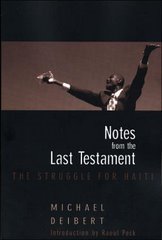
Despite its image of relentless poverty and political unrest, Haiti is the most beguiling and charming of destinations for foreign observers, but also one of the most maddeningly complex. From broad brushstrokes outlining the surface of events, outsiders, often devoid of context, are sometimes forced to draw not-always-accurate conclusions. As the place that gave me my start as a foreign correspondent and which was the subject of my first book, Notes from the Last Testament: The Struggle for Haiti (Seven Stories Press, 2005), Haiti has always had a special place in my heart and trying to inject some history into the discussion of the country has become something of a personal mission. Below are several books that I think would add greatly to our general understanding of Haiti. Though I am sure readers would care to add their own to this list (and though I am sure I have forgotten something essential), this strikes me as a good place to start. MD


Nonfiction

Divine Horsemen: The Voodoo Gods of Haiti by Maya Deren
This book, poetic and impressionistic much like the author's more-famous experimental cinema, was the result of years of immersion in Haiti's religious culture, and acts as a worthy companion to the film of the same name.

Papa Doc: Haiti and Its Dictator by Bernard Diederich & Al Burt
This book by two veteran journalists bring to life the tyranny of the dictator François "Papa Doc" Duvalier, who ruled Haiti from 1957 to 1971 and set a bloody benchmark for despots ever since.

Island Possessed by Katherine Dunham
A memoir by the famous African-American choreographer, who lived in Haiti and became the lover of its future president, Dumarsais Estimé, this book is eloquent testimony to the power of Haiti to move and change those who visit her.

The Prophet and Power: Jean-Bertrand Aristide, the International Community, and Haiti by Alex Dupuy

This important book by the Haitian sociologist and Wesleyan University professor looks with an unsentimental lens at the the second mandate of Haiti's twice-ousted president, Jean-Bertrand Aristide.

Never the Hope Itself: Love and Ghosts in Latin America and Haiti by Gerry Hadden
A former National Public Radio correspondent who covered Haiti's chaotic 2000 to 2004 era gives us an eyewitness account of how the government of Jean-Bertrand Aristide came to an end amidst a tidal wave of corruption, violence and dashed dreams.

Written in Blood: The Story of the Haitian People 1492-1995 by Robert Debs Heinl and Nancy Gordon Heinl

The best general history of Haiti available in English comes from perhaps an unlikely source, a former chief of the U.S. naval mission to Haiti who ran afoul of dictator François Duvalier. Nevertheless, over a gripping 889 pages, the military man and his journalist wife sustain a compelling narrative of Haiti's tumultuous history, resurrecting names and events that have been all-but-forgotten in most English-language writing on the subject.

Voodoo in Haiti by Alfred Métraux
The result of travels through the Haitian countryside by the Swiss Métraux along with his friend, the great Haitian author Jacques Roumain, this decades-old work remains the best overview of Haiti's syncretic indigenous religion.

Red and Black in Haiti: Radicalism, Conflict, and Political Change, 1934-1957 by Matthew J. Smith

This book by a young Jamaican historian covers the period between the departure of the U.S. Marines after a 20-year military occupation and the coming to power of François Duvalier. In doing so, it demonstrates how the dysfunctional nature of Haiti's politics cannot be blamed on a single source, but is rather the product of decades of political and economic miscalculation and ill-intention on the part of both Haiti's leaders and the international community.

Bonjour Blanc: A Journey Through Haiti by Ian Thomson
The English author's experiences traveling through Haiti may be 25 years old, but this book reveals the colour, grime exhilaration and despair which foreigners often experience when ranging through Haiti better than almost any book before or since.

The Rainy Season: Haiti Since Duvalier by Amy Wilentz
A beautifully-written account of the years immediately following the fall of the 29-year Duvalier family dictatorship, this book also served to bring to international prominence a young Haitian priest named Jean-Bertrand Aristide, whose depressing legacy once he entered politics gave lie to the man's once-rich promise.

Fiction

General Sun, My Brother by Jacques Stephen Alexis
A timeless novel of poverty, oppression and flight, this enthralling work is the most famous by the author, who died in an unsuccessful 1961 attempt to overthrow François Duvalier.

Brief Encounters with Che Guevara: Stories by Ben Fountain
This PEN Award-winning 2007 collection of short stories contains several set in Haiti that are obviously the work of someone who has experienced the country at great length.

Vale of Tears: A Novel from Haiti by Paulette Poujol Oriol
A vivid depiction of Port-au-Prince and the life of a woman whose existence has been one of endless struggle, this book is one of the key works from one of Haiti's most important novelists.

Masters of the Dew by Jacques Roumain
This 1943 novel by a Haitian author and diplomat eloquently addresses the plight of Haiti's peasantry in terms that sadly are as relevant today as when the book first appeared.

Children of Heroes by Lyonel Trouillot
A short novel by the man who is probably Haiti's greatest living author, sensitively translated by Linda Coverdale, this book tells the bleak story of two children attempting to flee a Port-au-Prince slum after killing their abusive father.

En français

The works of the Haitian scholars Roger Gaillard, Suzy Castor and Laënnec Hurbon, novelists such as Gary Victor, and others such as the French anthropologist Gérard Barthélemy, are indispensable to any serious understanding of Haiti.

Friday, November 4, 2011

Lyonel Trouillot, écrivain de la colère

Littérature

Lyonel Trouillot, écrivain de la colère

04/11/2011 à 19h:54

Par Tshitenge Lubabu M.K.

Jeune Afrique

(Read the original article here)

Les lecteurs de l’écrivain haïtien Lyonel Trouillot ont cru jusqu’au bout que le Goncourt 2011 allait lui être décerné. Tel n’a pas été le cas. Mais sa sélection a permis d’attirer l’attention sur son œuvre dont l’engagement est le credo inaliénable.

« On fait tous de la surenchère. Quel que soit le pays, il y a toujours un écart entre le jour de la fête nationale et le reste de l’année, entre les discours officiels et le parler tremblé de la vie quotidienne, entre les cartes postales et les vies de chien du commun des mortels. Ne viens pas me raconter que chez toi tout est beau. Que tous y sont heureux ». Cette citation tirée de La Belle amour humaine, le dernier roman de Lyonel Trouillot qui lui a valu d’être, jusqu’au 2 novembre, sur la liste des quatre finalistes du prix Goncourt, semble à elle seule résumer la fougue de son auteur qui s'y trouve tout entier. Homme en colère, qui n’accepte ni l’indifférence des siens face à la paupérisation du plus grand nombre, ni l’arrogance de ceux qui, parce que nantis ou se croyant tels, s'autoproclament conscience du monde, prompts à juger sans apporter de solution à l’égoïsme humain, à l’exploitation de l’homme par son semblable et à la déliquescence du monde qui les entoure.

Le 31 décembre, Lyonel Trouillot aura 55 ans. Sa carrière littéraire, dont la première œuvre a été publiée en 1979, compte à ce jour dix-sept titres, allant de la poésie au roman. Sa particularité : il écrit aussi bien en français qu’en créole haïtien. Dès le départ, il a choisi sa voie sans la moindre équivoque : l’engagement, c’est-à-dire la dénonciation des laideurs de son île, de son peuple, dont l’histoire est à la fois grandiose et triste. C’est à Haïti, nul ne peut l'oublier, que, pour la première fois dans l’Histoire de l’humanité, un peuple d’esclaves a vaincu l’armée du maître et arraché son indépendance. Mais la geste grandiose de Toussaint Louverture se transformera, pendant deux siècles, en tragédie-comédie.

"Écrire avec Haïti"

Balloté entre oppression interne, occupation et ingérence extérieures, Haïti n’a cessé de souffrir dans sa chair. Pour Trouillot, point n’est besoin de réécrire l’Histoire. Il faut l’assumer. Combattre, surtout, pour l’avènement d’un pays plus juste, plus fraternel, plus humain, plus solidaire. Il n’est point question, affirme-t-il, « d’écrire sur Haïti, mais avec Haïti, un pays qui se débat pour produire une belle histoire alors qu’il est du côté le plus sombre de l’Histoire ».

Pourtant, Trouillot n’est pas ce qu’on peut appeler un fils du peuple. Un père professeur de droit et bâtonnier à Port-au-Prince, plutôt bien vu du régime de François Duvalier. Une mère infirmière. En 1970, un an avant la mort de Duvalier, Trouillot se retrouve aux États-Unis, principale terre d’exil de milliers de ses compatriotes. Il revient néanmoins sur son île cinq ans plus tard. Objectif : jouer un rôle actif afin de contribuer à la chute du régime de Duvalier fils, alias Bébé Doc.

S’il étudie le droit, tradition familiale oblige, il se plonge dans la littérature. Il lit, certes, mais il écrit surtout des poèmes dans lequel il distille toute la subversion qui l’anime. Il le jure : « Il n’y a d’écriture que politique ». En 1980-1982, Trouillot se retrouve à Miami. Mais il ne tarde pas à regagner Haïti. Pour lui, être sur le terrain est fondamental. Et depuis, il ne cesse de se battre - en s'engageant par exemple dans le Collectif NON, qui réclame le départ de Jean-Bertrand Aristide. Dans sa quête d'homme et d'écrivain, maniant une écriture dense et poétique, il se révèle comme un véritable maître de la parole dont l’ambition, la seule, est de rendre la complexité de son île. Une île qui doit tendre les bras à l’espoir.