Showing posts with label Myriam Merlet. Show all posts

Tuesday, March 29, 2011

The Legacy of Haitian Feminist Paulette Poujol-Oriol

The Legacy of Haitian Feminist Paulette Poujol-Oriol

By Gina Ulysse

(Read the original article here)

Paulette Poujol-Oriol, who died March 11 at age 84, left her birth country, Haiti, a legacy that is immeasurable. She was one of Haiti’s most ardent feminist leaders, as well as an unmatched cultural producer and worker.

She was born in Port-au-Prince on May 12, 1926 to Joseph Poujol, founder of the Commercial Institute, and Augusta Auxila, a homemaker. The family migrated to France when she was eight months old. Poujol-Oriol spent six formative years in Paris, where her parents were engaged in the worlds of commerce, education and theater. She credited this time in Paris as instrumental to her development as a renaissance woman.

Poujol-Oriol began her school studies at the École Normale Supérieure in Port-au-Prince, then went on to Jamaica where she attended the London Institute of Commerce and Business Administration. She started to teach at her father’s institute at the age of 16. With additional studies in education, she dedicated herself to teaching, but never stopped her own learning. In addition to being fluent in French, Kreyol and Spanish, she eventually learned and mastered English, Italian and German.

But aside from teaching, Poujol-Oriol was writing. She published her first novel, Le Creuset (The Crucible) in 1980, winning the Prix Henri Deschamps–just the second woman to have ever received that prestigious Haitian literary award. Another work, La Fleur Rouge (The Red Flower) was awarded Radio France Internationale’s Best Novel award in 1988. Her novel Le Passage (Vale of Tears) was translated into English with a forward by well-known Haitian writer Edwidge Danticat.

And aside from teaching and writing, Poujol-Orio was an actress and playwright, as well as the director and founder of Haiti’s Piccolo Teatro, which introduced children to the theatre arts. Over the course of her life as a prolific writer, relentless artist and activist, she became one of Haiti’s most highly acclaimed women, a recipient of acknowledgements and awards too numerous to name.

As a staunch feminist activist, she battled for Haitian women’s causes and visibility in her writing as well as in practice. At a very young age, she defied gendered and classed restrictions, possessing a hunger for knowledge–encouraged by her parents–that surpassed social expectations of young women of her class. These made her a recognizable intellectual force. In an interview on Thomas Spear’s Ile en ile, Poujol-Oriol recalls being steered towards gentler literature by booksellers astonished by her ferocious passion for French classics. The sense that less is expected of women and that they should be invisible motivated many of her undertakings.

In many ways, Poujol-Oriol was both a product of her privileged socio-economic background as well as a challenge to its strictures. Highly visible and engaged in the world, she insisted on keeping her name when she married, bore two children, divorced and remarried–at a time when such practices (keeping your own name, divorcing, remarrying) were frowned upon in Haiti. All the while, she continued to pursue her art and social interests.

In 1950, she became a member of the Ligue Féminine d’Action Sociale (Women’s League for Social Action)- the organization founded in 1934 to advance women’s rights in Haiti. She served as president of the League from 1997 until her death. She was also a founding member of several women’s associations, including L’Alliance des Femmes Haitiennes (Alliance of Haitian Women), an umbrella organization that coordinates more than fifty women’s groups.

Baruch College professor and Haitian sociologist Carolle Charles met Poujol-Oriol in 2005 at the Caribbean and Latin American conference on women and citizenship. She remembers her “as a feminist organizer [who] also knew about the fragility of Haitian institutions, thus her strong support to newer feminist organizations.” That gathering was organized by Haiti’s only feminist research center, Enfofanm, directed by Myriam Merlet–one of the four well-known feminists who perished in the 2010 earthquake. At the conference, Poujol-Oriol, a member of the board of directors of Enfofanm, received a life achievement award for her contribution to the Haitian women’s movement. Her “level of commitment to the women movement,” says Charles, “was uncompromising.”

In Haiti these days, with the contested elections run-off and the return of exiled former president Jean-Bertrand Aristide, Paulette Poujol-Oriol’s passing has received less attention than it truly deserves. She was a much beloved intellectual mother to hundreds of students, who called her mommy. She is survived by her actual son, physician Georges Michel, who resides in Haiti, and her daughter, Claudine Michel a professor of education and black studies at the University of California Santa Barbara. In Haiti’s Le Nouvelliste, her son is quoted saying, “She had lots of projects (plays, novels) [in the works]. Even at her age, she continued to write.”

Poujol-Oriol inspired generations of Haitian writers, artists and feminist activists. Speaking of her loss, Charles paraphrases the popular Haitian saying, “she came from a small country, but a great nation.” Then she added what other obituaries consistently insist: “She stood against injustice and inequality. She was a “poto mitan”–a formidable central pillar.

Wednesday, February 3, 2010

In Memoriam : Les disparus du 12 janvier

Haïti-Séisme-Décès

In Memoriam : Les disparus du 12 janvier

Liste actualisée des nombreux responsables et personnalités d’horizons divers emportés par le monstre

mercredi 3 février 2010,

Radio Kiskeya

(Read the original article here)

Voici une nouvelle liste partielle de certains des nombreux dirigeants politiques, intellectuels, universitaires, parlementaires, fonctionnaires de l’Etat, leaders religieux, responsables onusiens, professionnels et militants brutalement emportés par l’horreur du 12 janvier. Ils ont pratiquement laissé un vide en ressources humaines qualifiées impossible à combler et un déficit majeur pour Haïti déjà à bout de souffle avant le tremblement de terre.

. Professseur Hubert Deronceray, 77 ans, tué en compagnie de sa sœur à Christ-Roi (nord-est de Port-au-Prince), l’un des quartiers les plus ravagés. Leader du Grand front centre-droit (GFCD), ex-candidat à la présidence et docteur en sociologie, il fut notamment ministre des affaires sociales sous Jean-Claude Duvalier (1971-1986).

. Professeur Micha Gaillard, l’un des dirigeants de la Fusion des sociaux-démocrates, décédé peu après avoir été victime de graves blessures dans l’effondrement du ministère de la justice où il participait à une réunion. Fils de l’historien Roger Gaillard et professeur à l’université, Micha était un militant impénitent caractérisé par sa jovialité, sa tolérance, une grande ouverture d’esprit et même une bonhomie qui frisait la naïveté.

. Alix Auguste, coordonnateur général du parti UCADDE. Une nouvelle figure qui commençait à peine à faire ses premiers pas sur la scène politique.

. Professeur Pierre Vernet, mort en même temps qu’au moins une centaine d’enseignants et étudiants de la Faculté de linguistique appliquée (FLA), l’une des onze entités de l’Université d’Etat d’Haïti (UEH) transformée en quelques secondes en une montagne de gravats.

Véritable autorité dans le domaine des sciences du langage en Haïti où il a fondé (en 1978) et dirigé pendant plus de 30 ans la Faculté de linguistique appliquée tout en assurant une promotion courageuse du créole, Vernet était notamment membre du Centre de la recherche scientifique (CNRS), en France.

Membre du conseil de l’université et militant discret de la cause démocratique, Pierre s’est brutalement séparé de son épouse et de leurs deux enfants.

. Wesner Mérant, vice-doyen de la FLA et ancien collaborateur de Radio Kiskeya

. Yves Alvarez, membre du corps professoral de la FLA

. Professeur Georges Anglade, célèbre géographe et l’un des rares théoriciens haïtiens. L’écrivain, universitaire et chroniqueur est mort dans l’effondrement de la maison de Philippe Rouzier. Les deux hommes avaient épousé chacun une sœur.

Anglade fut ministre des travaux publics sous Lavalas, première version.

. Mireille Neptune Anglade, écrivain et épouse du disparu. Elle dirigeait ces derniers mois une organisation féminine Lig Pouvwa Fanm (LIPOUFANM).

. Philippe Charles Claude Rouzier, ex-économiste en chef du bureau du Programme des Nations Unies pour le développement en Haïti (PNUD). Il était attaché depuis un certain temps au bureau des affaires civiles de la MINUSTAH.

Rouzier est mort en compagnie du couple Anglade et du jeune Olivier Neptune, petit-fils de feu le journaliste Jean Dominique.

. Professeur Serge Petit-Frère, universitaire et pédagogue très respecté

. Mgr Joseph Serge Miot, 63 ans, archevêque coadjuteur de Port-au-Prince. Le prélat a péri en compagnie de plusieurs autres personnes à la suite de l’écroulement de l’archevêché.

De nombreux autres religieux, prêtres, frères et sœurs appartenant à différentes congrégations n’ont pas non plus survécu à la catastrophe.

. Me Roc Cadet, 46 ans, doyen du tribunal civil de Port-au-Prince.

. Jean-Claude Rigueur, juge d’instruction, natif de Fond des Nègres (sud).

Les deux magistrats se trouvaient parmi la trentaine de victimes de l’effondrement du Palais de justice de la capitale.

. Jacques Jean Wilbert, Sénateur sortant du Plateau Central (centre), Elu en 2006 sous la bannière de la plateforme d’alors du Président Préval "Lespwa", le parlementaire figurait sur la liste des candidats de la nouvelle coalition présidentielle "Inite" aux sénatoriales partielles de février-mars, reportées sine die.

. Louis Michelet, Sénateur sortant de l’Artibonite (nord). Il avait été élu pour seulement quelques mois sous le label "indépendant" lors des législatives controversées du 21 juin 2009.

Les deux élus sont morts sous les décombres du Palais Législatif désormais totalement en ruine.

. Jean Frantz Richard et Murray Lustin Junior, respectivement directeur général et directeur des opérations de la Direction générale des impôts (DGI)

. Nicole Grégoire, responsable des affaires dominicaines à la chancellerie.

. Patrick Isidor, beau-frère de Nicole, chef du cabinet particulier de la ministre des affaires étrangères, Marie-Michèle Rey.

. Pierre Richard Jean-Pierre, chef de cabinet de la ministre de la culture et de la communication, Marie-Laurence Jocelyn Lassègue. Il était aussi l’animateur à la télévision de l’émission littéraire "Absolument livre".

. Hédi Annabi, représentant spécial du Secrétaire général de l’ONU et, à ce titre, chef de la Mission des Nations Unies pour la stabilisation en Haïti (MINUSTAH). De nationalité tunisienne, il était un fin diplomate et reconnu comme l’un des plus grands spécialistes onusiens en matière d’opération de maintien de la paix à travers le monde.

Un hommage appuyé lui a été rendu lors de ses émouvantes funérailles célébrées le 22 janvier à Tunis.

. Luis Carlos da Costa, brésilien et chef adjoint de la MINUSTAH. Le Président brésilien Luiz Inàcio Lula da Silva a rendu hommage au disparu et à une vingtaine de casques bleus brésiliens qui avaient également péri.

. Riquet Michel, présentateur des émissions radiophoniques de la MINUSTAH et ancien journaliste à Radio Métropole, une station privée de Port-au-Prince.

Une centaine de militaires, policiers et employés civils de la force onusienne ont disparu dans l’effondrement du QG de la mission (Hôtel Christopher). Parmi eux, Riquet Michel, membre de la section communication et ancien journaliste à Radio Métropole, une station privée de Port-au-Prince.

. Myriam Merlet, 53 ans, économiste de fornmation, féministe et militante convaincue, décédée à son domicile. Grâce à une production intellectuelle de premier ordre axée sur l’équité de genre, elle a énormément contribué à la lutte menée, ces dernières années, en faveur de l’émancipation des femmes et a été chef de cabinet de la ministre à la condition féminine et aux droits de la femme.

. Magalie Marcelin, féministe versée surtout dans un activisme jugé souvent audacieux et sans concession. Elle était l’une des dirigeantes de l’organisation Kay Fanm.

Celle qui se révéla au public pour sa prestation de jeune actrice dans "Anita", un film du cinéaste haïtien Rassoul Labuchin, réalisé en 1979, laisse sa fille unique, Maïlé.

. Anne-Marie Coriolan, militante sociale et féministe discrète, mais qui s’efforçait d’atteindre une rigueur intellectuelle certaine dans ses démarches et interventions.

Membre fondatrice de l’orgabnisation féministe Solidarite fanm ayisyen (SOFA) et diplomée en sciences du langage (Faculté de linguistique appliquée d’Haïti + cours à distance dans une université française), Anne-Marie était mère de deux enfants.

Elle est partie tragiquement, comme son frère Fred Coriolan mort électrocuté le 26 avril 1986 lors d’une manifestation anti-duvaliériste devant le sinistre Fort-Dimanche qui s’était terminée dans le sang.

. Ginna Porcena, directrice de l’institut national géospatial (INGS). Cette jeune femme très dynamique, ancienne journaliste à Radio Galaxie et Tropic FM, deux stations privées de Port-au-Prince, était devenue l’une des valeurs sûres de la fonction publique haïtienne. Ironie du sort, Gina faisait partie d’une task force scientifique à l’état embryonnaire qui visait à doter Haïti de stations sismologiques capables de relever les données essentielles sur les mouvements géologiques à l’origine des tremblements de terre.

Carlo Lochard, ancien directeur départemental de l’Ouest de la Police Nationale (DDO) et candidat à la Députation dans la deuxième circonscription de Port-au-Prince sous la bannière du parti Konbit de Claire-Lydie Parent, la mairesse de Pétion-Ville.

Plusieurs membres de sa famille ont également disparu.

. Moïse Chérubin, avocat et fonctionnaire du ministère de la justice. Frère du militant bien connu Jean-Claude Chérubin, il fut dans le temps un collaborateur bénévole de Radio Kiskeya à l’occasion de la couverture d’événements sportifs internationaux comme la Coupe du monde de football.

. Pierre-Richard Perraut, directeur de vente à la Auto PLaza, concessionnaire de véhicules asiatiques. L’entreprise est la propriété du Dr Réginald Boulos, actuel président de la chambre de commerce et d’industrie d’Haïti (CCIH).

Connu et très apprécié pour son affabilité, Pierre-Richard était un modeste citoyen qui, comme beaucoup d’autres, rêvait d’un véritable changement social en Haïti.

. Garry St-Germain, ex-cadre de la mairie de Port-au-Prince et président-fondateur de la JAMA, une fondation qui tentait de proposer une alternative en matière d’offre culturelle à travers les journées annuelles de l’art, de la mode et de l’artisanat.

. Guercy Antoine, spécialiste des questions haïtiano-dominicaines et professeur à l’université. Décédé à son domicile.

. Me Jean Rosier Descarde, anthropolgue et professeur à l’université, décédé sous les décombres du Caribbean Supermarket.

. Yolène Lhérisson, professeure à la faculté des sciences de l’Université d’Etat d’Haïti.

Friday, January 22, 2010

The Haiti I love is still there

The Haiti I love is still there

Returning to my sometimes-home, I discovered devastation and friends who died, but the country's heart is beating

By Michael Deibert

Jan. 23, 2010

Salon

(Read the original article here)

One night, only days after an earthquake had leveled huge swaths of Haiti's capital, Port-au-Prince, and killed an estimated 200,000 people there and in its environs, I found myself cruising thorough the city on the back of a moto-taxi.

A crowded, dirty but also irrepressibly vibrant city during normal times, Port-au-Prince that night presented a landscape that could fairly be described as nightmarish.

Visible through the darkness, the ruined shells of buildings destroyed in the 7.0 quake looked over the fragile forms of hundreds of thousands of people reduced to sleeping in the streets, while in the air mingled the corrosive smell of burning garbage and the vomitous, cloyingly sweet stench of human decay.

A city I have sporadically called home since I first visited Haiti in 1997, and whose personality had become deeply ingrained in my soul, Port-au-Prince had never seemed more desperate or defeated.

Then something happened. Despite the terrible suffering that had been visited on this poor nation of 9 million people, it began to dawn on me that, along the streets that I knew so well, life was going on after this terrible trauma.

Next to the shell of Haiti's Palais National, the hypnotizingly white grand dame of the city's architectural jewels that successive Haitian politicians have fought to control even as their country grew ever-more impoverished and ruined, market women were still frying up marinade and fritay in old steel pots. In the Petionville market, despite the late hour and lack of electricity, goods and fried chicken were still being sold by the orange glow of kerosene lamps. By the following day, dozens of young Haitians had begun sweeping with brooms in front of the ruined Cathédrale Nationale, in preparation for the Saturday funeral on its grounds of Archbishop Serge Miot, who perished within its walls.

"I've worked with this moto for my entire youth," the driver, a young man named Emmanuel, told me that night as we headed up Avenue Pan American, passed the ruins of the United Nations compound where scores of United Nations workers, including mission chief Hédi Annabi, and his deputy, Luiz Carlos da Costa, lost their lives.

"Tout moun jwenn," Emmanuel told me as we conversed in Haiti's native Kreyol language. "Kounye-a, y'ap domi ak Jesu."

Everyone was hit. Now they sleep with Jesus.

Far from being the looting mobs that some media have portrayed them as, hardly anyone who has witnessed the response of the Haitians to this great catastrophe has not been moved by their incredible resilience and solidarity and their intact sense of humor in the face of an unimaginable tragedy.

As all the pillars of the Haitian state -- a state that has often seemed only able to rouse itself to parasitically victimize its own people when it did make its presence felt -- collapsed around them, the Haitians helped one another, dug through rubble, prayed, sang and showed everyone who has watched them what the meaning of true perseverance in the face of adversity looks like, even though the losses have been tremendous and irreplaceable.

Micha Gaillard, a university professor and son of one of Haiti's eminent historians, was one of the first political leaders I met while traveling to Haiti, and I recall him greeting me in his modest home in the Turgeau neighborhood as his charming wife, Katy, prepared us coffee. Katy passed away far too early a few years ago, and Micha died after the Palais de Justice collapsed on him, dying in what must have been agony after having been trapped for many hours. Three of the country's foremost feminist thinkers -- Myriam Merlet, Magalie Marcelin and Anne Marie Coriolan -- also died that day. The damage to the country's artistic heritage, from the almost-total collapse of the Episcopal Cathédrale Sainte Trinité, which boasted stunning indigenous murals by such eminent Haitian painters as Wilson Bigaud and Philome Obin, to the loss of much of the Nader art collection, probably the best private collection of Haitian art in the world, is incalculable.

Sometimes since I have returned to Haiti in the immediate aftermath of the earthquake, I have felt as if I would be overcome by despair. Looking at block after block of ruins throughout the capital's downtown, or seeing the terrible death and destruction caused by the collapse of the Université de Port-au-Prince, ringed by weeping, desperate relatives of those lost, one almost wants to turn away.

But the Haitians, always the Haitians, keep one going, and seeing their dignity in this moment has made me love them and their battered country as never before.

"Life goes on," a friend of mine who lost his wife in the earthquake told me yesterday, bringing to mind the famous Haitian proverb, deye mon gen mon. Beyond the mountains there are more mountains.

There is time to mourn a loss, and to bury the dead. More aid is needed, and more transparency and coordination to get it out to people, not just now but over the long term. But step by step, I believe that Haiti, a country of personal goodwill and stunning artistic accomplishment as much as it is a place of dysfunctional politics and venal politicians, will indeed rebuild. Perhaps differently than before, but a people who have suffered and endured so much seem, in my conversations with them on street corners under the blazing sun, in tent cities that have sprung up along the roadside, and in grievously affected provincial villages, to be able to withstand even this latest grievous shock and come back swinging.


I hope that we foreigners, who have been so moved by the place, treated so kindly and educated so patiently by its people, will be there to help. Haiti needs its friends now more than ever.

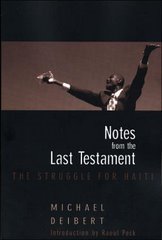
Michael Deibert is the author of "Notes From the Last Testament: The Struggle for Haiti." He writes at www.michaeldeibert.blogspot.com.